Thursday, August 22, 2013

Universal Preschool and Publishing

Does anyone know where Obama's Universal pre-K plan stands? Thoughts of it and its potential impact on publishing have been rumbling through my brain for some time now. According to the Washington Post last February, only 3 out of 10 four year olds currently attend preschool. To narrow the achievement gap, Obama wants to institute a program that would provide funding for preschool to all families 200% and lower than the poverty rate. These preschools would have strict academic standards with teachers trained and paid at the same levels as current k-12 teachers. I'm not saying this would eliminate the achievement gap, but as a teacher, I have no doubt that this would make a significant difference in the achievement of these students.

From the New America Foundation:
The president’s budget proposes $1.3 billion for 2014 and anticipates making awards to just 12 to 18 states. Recognizing that many states have a lot of work to do, the administration is also proposing a second, $750 million, pre-K grant program called Preschool Development Grants. These would be smaller, competitive grants and would help states build necessary infrastructure, such as workforce and facility development, to support the creation or expansion of pre-K programs.
As an author and illustrator, I'm thinking of the picture book market which has been in a slump for more than a decade. Let's pretend we doubled the preschool programs in the U.S. These classrooms need what?

Books! Picture books.

I hope publishers are thinking about this already and are gearing up to bring more young literature to the market. Because CORE standards are emphasizing nonfiction like never before, I would also expect publishers to be looking to acquire child-friendly NF, though children certainly need to be exposed to broad range of engaging text. (And as much as many publishers claim to be "not interested" in rhyming text, rhyming is hugely important to children as a pre-reading skill, which is why librarians include so much of it in their "storytimes" in public library programs. Hint, hint, publishers.)

What are your thoughts on the Obama initiative regarding preschool, and do you think this will affect the picture book market? Publishers, are you looking at this and planning for it, or do you expect to take a wait-and-see-attitude before increasing your PB offerings?

Thursday, August 15, 2013

Back to School!

As a visiting Author/Illustrator it's that time of year again. Like all the other teachers out there, we're going over our teaching materials, updating anything that needs to be updated, and rethinking our teaching strategies--what worked well last year? What could be improved upon? What could be done to make my visit more impactful to the students?

Ed Young at the Mazza Museum Summer Conference
I'm up to my eyeballs in documents, creating more streamlined files, and marking upcoming author visits on the calendar. And that's what's taking me away from my blog. But life is just that way--we have a lull where everything seems to fall into place, and then there's a rush where there's not enough time in the day.

I hearken to what Ed Young said about creating a predictable life. It really is the unexpected, or the extreme (even extreme busyness) that gives us something to look back upon and said "Wow, what a ride!"

What are your preparations like for the new school year? What's your ride like out there, and what has you busy right now?

Saturday, August 10, 2013

10-for-10 Picture Book Event 2013

This is my first year to participate in the 10-for-10 event. My list consists of the 10 picture books I, as a teacher, author, and illustrator, can't live without. Here goes:

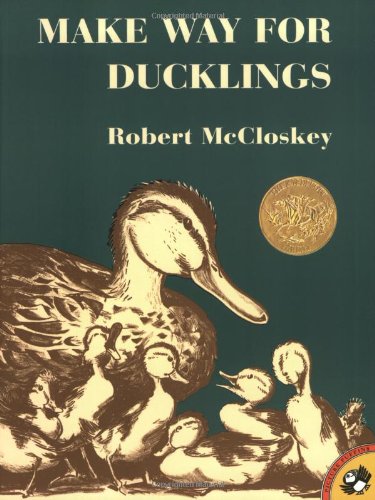
1.  Make Way for Ducklings by Robert McCloskey--I had to begin my list with this because when I was a child and was taken to the library every week, though I searched and searched, I could not find a better book than this, so I checked it out each week. My parents then made a new rule: I had to check out two books, one of which could not be Make Way for Ducklings. Problem solved.


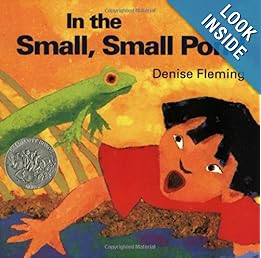
2.  In a Small, Small Pond by Denise Fleming. --Here is a great example of writing about a "small moment" and it's a great mentor text for that. Couple that with Fleming's brilliant and innovative paper pulp illustrations and you have pure genius.


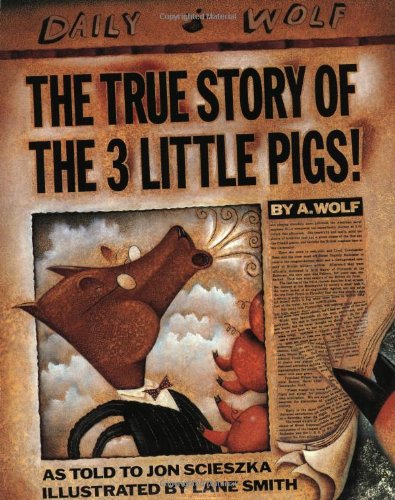
3.   The True Story Of The Three Little Pigs by Jon Scieszka  --Here is a great example of Point of View and could be a great mentor text for kids of all ages to write a familiar story from an alternative character's POV.


4.  Hook by Ed Young --I think that everything Ed Young does is brilliant, but I love this book for its sparseness. Sparse text, sparse illustration = less is more. For students who get hung up on trying to make their artwork look as realistic as possible, here's a great lesson in illustration that "gives the impression of," which is what illustration is meant to do. (If the publisher wanted the illustrations to look totally realistic, they'd use photos.) It's a freeing lesson for children.


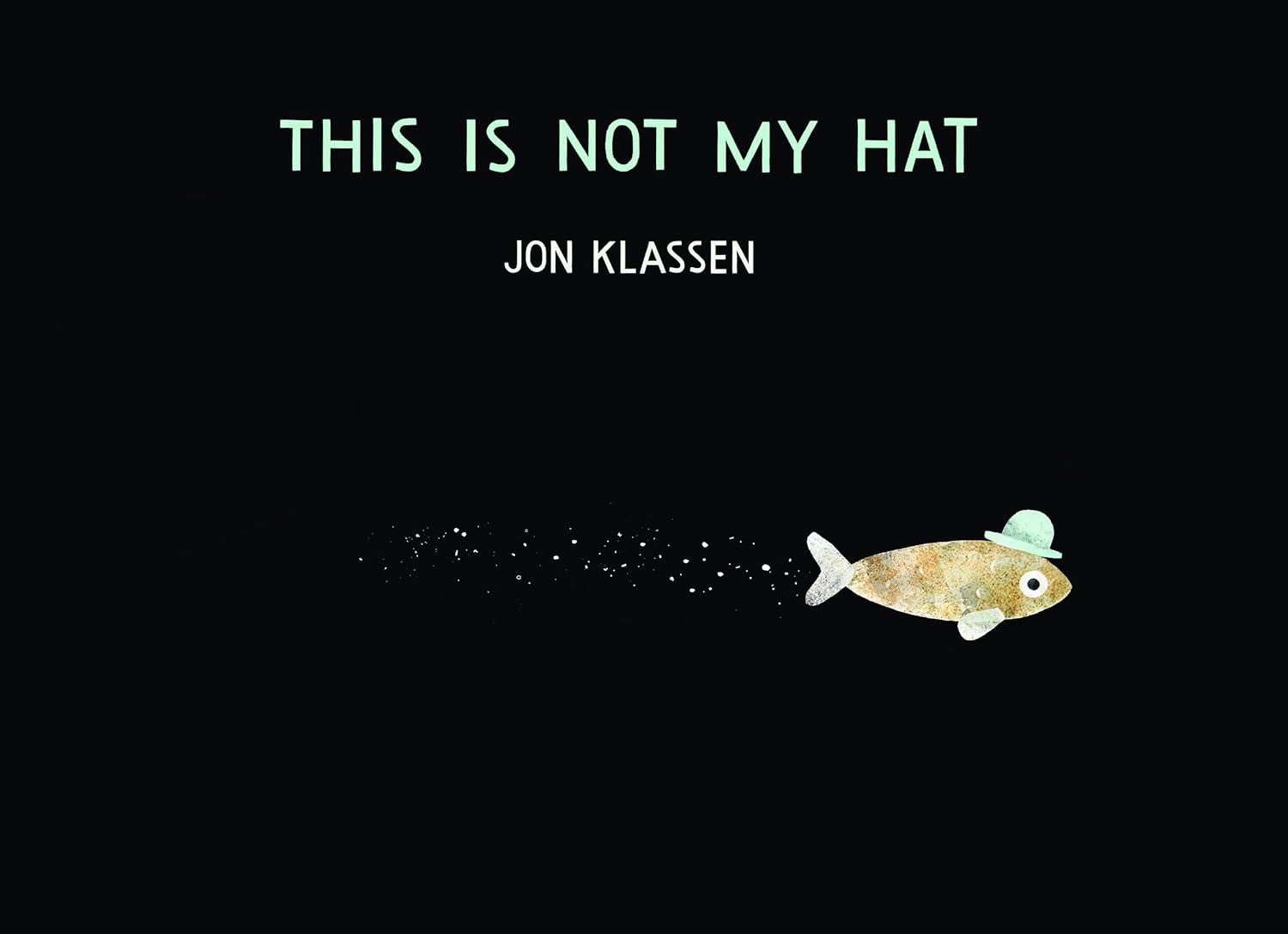
5.  This Is Not My Hat by Jon Klassen  --What I love, love, love about this book is that the text does not match the illustration, and kids know it. Great for examining inference! Several years ago I took a novel writing class where the teacher posed this question: "If the majority of communication is nonverbal, what are you doing in your writing about this?" This is the question in illustration, and Klassen handles it in the blink of an eye.


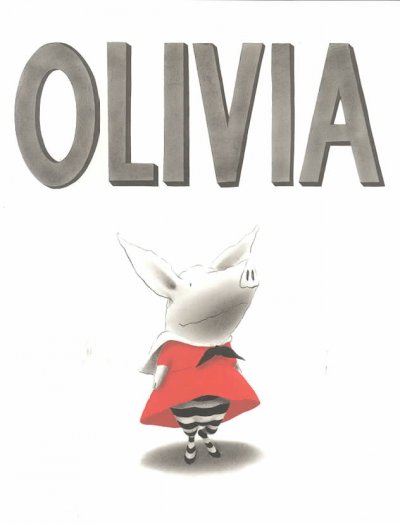
6.  Olivia by Ian Falconer--Olivia epitomizes the character-driven picture book, and no one, young or old, can tell me they don't like this little pig.


7.  The Lion and the Mouse by Jerry Pinkney --There are many awesome wordless picture books out there, but I challenge you to find one more beautiful than this one. I love the strength of wordless PBs in building vocabulary and blogged about it here.


8.  Country Crossing by Jim Aylesworth --This obscure little book stole my son's heart when he was young. I love it for a couple reasons. First, I think it's a great example of the "speed" of a text. This story begins slowly and quietly, becomes fast and loud in the middle, and returns to slow and quiet in the end. The other reason I love this book is the way the illustrations become the text--a beautiful meshing of text and image.


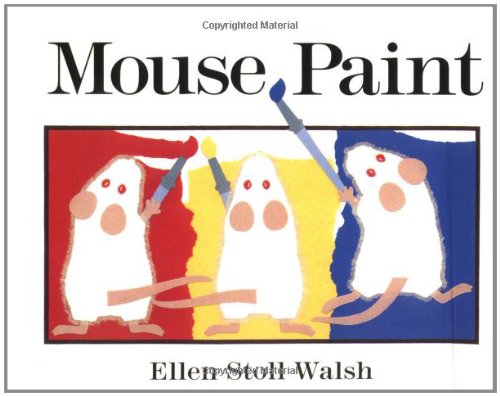
9.  Mouse Paint by Ellen Stoll Walsh--The first reason to love this book is because the mice are so darn cute. The second is because it teaches an art lesson and it's fun to duplicate that. Finally, I love this book as an example of character motivation--why the mice decide to become white again in the end.


10. The Reader by Amy Hest--I'll admit it--I have a love affair with quiet books, and they rarely make it through the publication process these days, but this one did. This quiet tale is of two friends who share a great and important experience together--reading! Couple this with some of the best work illustrator Lauren Castillo has done and you have beautiful book through and through that celebrates--what else?--reading!


Thank you to Cathy, at Reflect & Refine: Building a Learning Community, and Mandy, at Enjoy and Embrace Learning for sponsoring this 10 for 10 Picture Book event!

Wednesday, August 7, 2013

Preparing for the 10-for-10 Picture Book Event

I have been busy, busy, busy this summer, but I keep thinking I'm seeing a light at the end of the tunnel. I had a wonderful 4-week visit from my sister and adorable three-year-old niece, followed by the week-long illustration conference I blogged about, followed by helping my son pack and move from campus housing to my place, followed by another wonderful visit from another adorable niece--this one twenty-years-old. This week I'm trying to catch up on the home front and preparing to be a part of the 10-for-10 Picture Books Event (more about the 10-for-10 Picture Books event here) when I will post about 10 picture books I can't live without. I will post my list on Saturday, August 10th. If you're a picture book lover, (and who isn't?) think about joining the event. There are opportunities for those with blogs and those without!

Wednesday, July 24, 2013

6 Ways to Use Word Clouds in the Classroom

Word clouds rock. You'd expect me to say that--I'm a writer, and writers love words. But I'm a
teacher too, and word clouds are a cool way to pick out frequently used words from a text, so in a sense, word clouds are a little like notes (as in note-taking).

I've found a couple really cool websites that allow you to create your own word clouds by either pasting in a URL or by pasting text into their program. The results are really cool, and are sure to pique the interest of students.

I've tried several, and most create, well, kind of a blob of words in different colors and sizes (the largest of which are the most frequently used words, but this cool site, Tagexdo, let's you create shaped word clouds, which for me equals concrete poetry! You can either paste in text, or link to a URL and those words will be sorted into a cloud. Most let you choose a color scheme and font style, but Tagexdo lets you do that plus choose a shape. Shapes are limited, of course, but they have a wide variety which I believe could be used in the classroom with a little stretching of the imagination.

To test this out, I used my manuscript from Beco's Big Year, and here is the result:


Love it! These can be then transferred to mugs, t-shirts, etc., if desired. A class t-shirt or tote bag with student names could be a fun end of year project, or could be an awesome teacher gift!


Here are 6 ways you could use word clouds in the classroom:

1) Type in text from a book, as I did above, to create a visual reminder of the book or to be part of a book report.

2) Concrete Poetry, as I mentioned before. And why not? If students are studying a topic, give them their notes, help them to create an outline of their subject (trace an image that they've found in a resource, or find a printable outline online), and set them loose to fill their outline with words that pertain to that subject. This could also be done as a collage by cutting out words that pertain and gluing them into the outline

3) A cover for a subject report. Again, this could be done by hand, or through the use of technology. It's an engaging way to represent the report.

4) Use the word cloud as the report itself. It might help students to break up the image into sections, stained-glass-window-style, then write information (where this animal lives, what it eats, what type of animals it is, etc.) in each section.

5) Using Tagexdo to create the word cloud ensures that it consists of words, not sentences (which might be used in example number 3). Have students choose 5 words from the Tagexdo word cloud and present information about each. This will encourage the students to present more from memory than from simply reading aloud to the class.

6) Use a teacher-made word cloud as a study guide for your kids. You give them the topics in this fun, visually stimulating way, and they know what to study.

Any way you slice it, this is fun technology. What ideas do you have for using word clouds in the classroom?


Friday, July 19, 2013

Mazza Museum Summer Conference Day 5


Wow! It's hard to believe it's been a whole week! Today started with a bang with a keynote from Roger Roth. Roger grew up in a family that embraced the arts--his father was a writer and taught radio drama, and his mother went to art school, painted, and took Roger to art museums as a child. Roger himself attended art schools as a youth, and has kept a sketchbook his his first class. After a false start at a university, Roger worked odd jobs, painting in his free time. Eventually, he landed at the Pratt Institute and when he graduated, he worked as a freelance illustrator for the likes of the New York Times and the Wall Street Journal. After doing an ad about Paris for a travel magazine, an editor contacted him. "We have a book about Paris," she said. "We wonder if you'd like to do it." That became the book (recently released by another publisher) The Giraffe That Walked To Paris. It'sbeauty!

Roger has since illustrated 18 books, including several by Jane Yolan. One fascinating story Roger told was of doing the book The American Story, which is 368 pages long. When he asked when they needed the art they said, "In a year."

Do the math, illustrators.

His answer was "I don't think I can get it to you that quickly," but they agreed to have him illustrate it anyway. For the next two and a half years, Roger delivered a finished drawing to them every three days! This book is worth taking a look at. The art is beautiful and wow--you've got to be impressed by the speed! Roger was a comfortable speaker and put his audience at ease. He shared about his family and hobbies ("Ice fishing is a very slow sport. Great for creative work.") We all enjoyed him.

Following Roger was Chris Raschka. Chris is a meticulous guy who admits to putting away all his art materials every night so "I can see my empty table in the morning." Whoever said creatives are messy? Roger is also very smart. He turned down medical school to pursue his love of art and has published over 50 books in his 20 years in the industry.

One particularly interesting thing Chris shared was that his book Otter and Odder: A Love Story (Candlewick 2012) was actually printed from the color book dummy (blown up 200%) he sent the
publisher. Can you imagine?
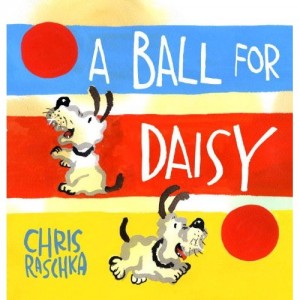
Chris won the Caledcott honor in 1994 for Yo! Yes!, and the Caldecott Medal in 1996 for Hello Goodbye Window, and again in 2012 for A Ball for Daisy. 

Chris looks the part of an artist, but on the other hand, I can imagine him a doctor as well. His speaking style is warm and friendly and at the same time to the point, with a "let's not waste time" attitude. It was a treat to hear him speak and to meet him!

Thursday, July 18, 2013

Mazza Museum Summer Conference Day 4


Tom Lichtenheld began our today. He is the illustrator of 19 books (more
currently being illustrated). Tom confessed that he was not good at school, but in middle school, his teacher submitted a piece of his artwork to a contest with Scholastic and Tom won a pin. Hurray for the teacher who recognized Tom’s gift and found a way to help Tom receive the affirmation that he had gifts, even if he didn’t fit the regular “school success” mold!
Like so many authors I know, Tom belongs to an illustration critique group and he showed how a simple crop of a picture (that Tom had not seen himself) took a really nice illustration to the next level.  I love this message for students who sometimes think of suggestions for work improvement as discouraging or even mean. Whenever authors and illustrators can share that they seek out good helpful criticism, it’s good for kids to hear. Two heads are better than one, I always tell kids (and explain it to the younger kids!)
Another thing I loved learning is that Tom’s website has free teacher resources here for book-use in the classroom. Yay! I guess that makes this a Freebie Thursday!

 
Following Tom we heard from author Sherri Dusky Rinker. Tom illustrated Sherri’s first two books, Good Night Good Night Construction Site, and Steam Train, Dream Train. Sherri spoke of how she feels she “won the lottery,” by being published by the amazing Chronicle Books—on her first submission ever. Okay children’s writers—deep breath—it couldn’t have happened to a nicer person.  Sherri a likeable speaker who is very transparent about her writing and revising process. She spoke of the agony she felt going through the editorial process the first time around—and how it’s getting easier. Sherri's presentation was interesting, informative, and funny!